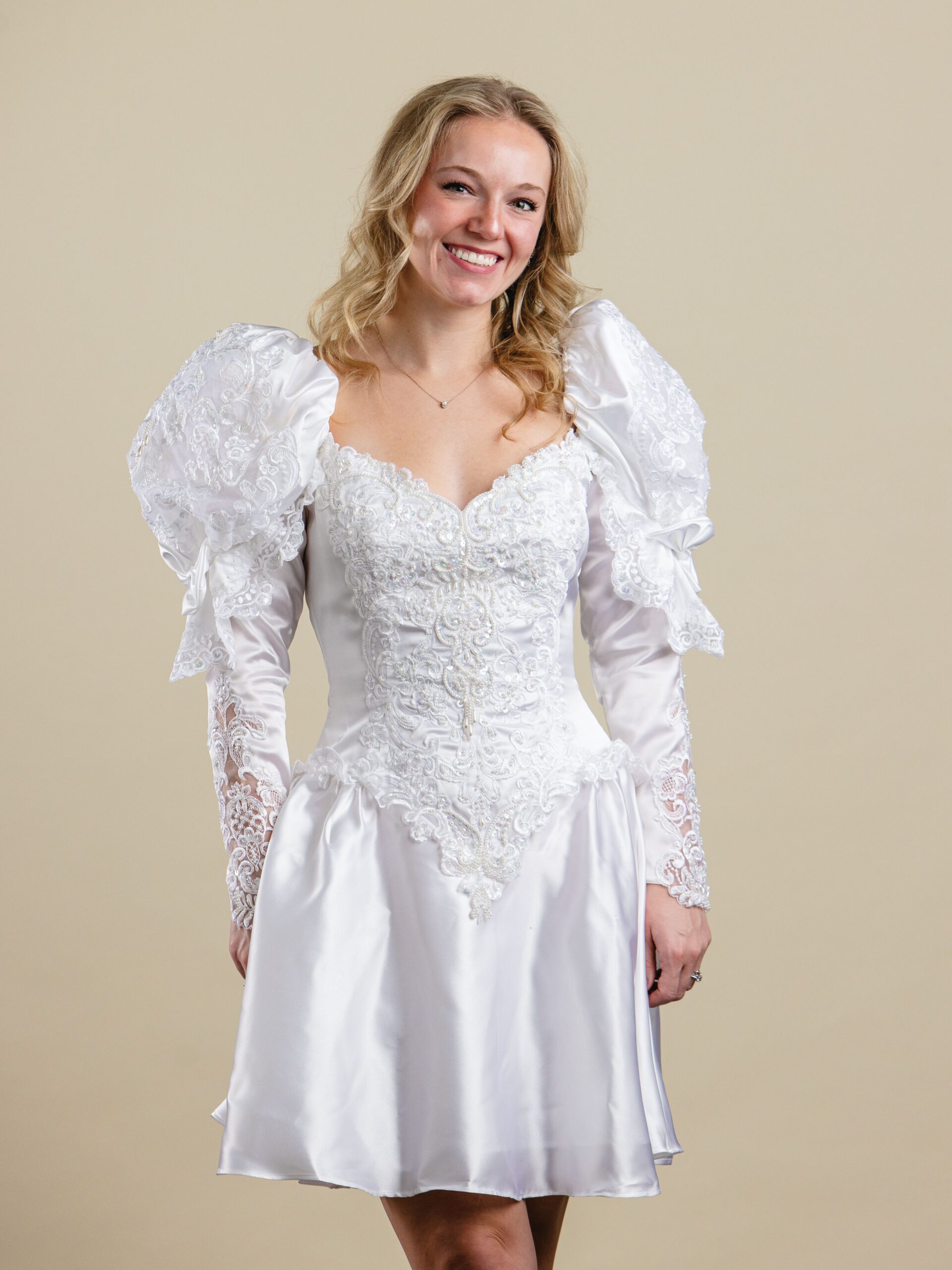
Seamstress Heather Baldridge worked alongside bride Paige Mead to remake Paige’s mother’s dress. The shortened bridal gown was worn during the Mead’s rehearsal dinner last October. Photo: Chris Emeott
Seamstress Heather Baldridge helps brides remake heirloom wedding gowns.
Heather Baldridge, owner of Woodbury alterations shop Custom Sewing by Heather, calls herself a “wedding dress specialist,” she says. And in addition to fitting and altering brand-new dresses, she’s also helping local brides take part in a growing trend to redesign and reuse heirloom and vintage dresses.
“In the past, I would have clients wanting me to take mom or grandma’s wedding dress and make it into a baptismal gown or maybe a getting-ready robe for their wedding,” Baldridge says. Within the past five years or so, more brides are asking to remake family heirloom gowns into wearable mementos for either the rehearsal dinner, ceremony or reception.
When a bride consults with Baldridge about remaking a family gown, she starts with a few essential questions. “How delicate is the fabric?” Baldridge asks. “Silks are very fragile because they’re natural fibers. Most dresses from the past several decades, though, are made from some kind of polyester, which does hold up fairly well.” (She asks brides to have their heirloom gowns professionally cleaned before she starts cutting and piecing.) She also asks about the vision. What story is a bride hoping to tell with her mother’s or grandmother’s dress?
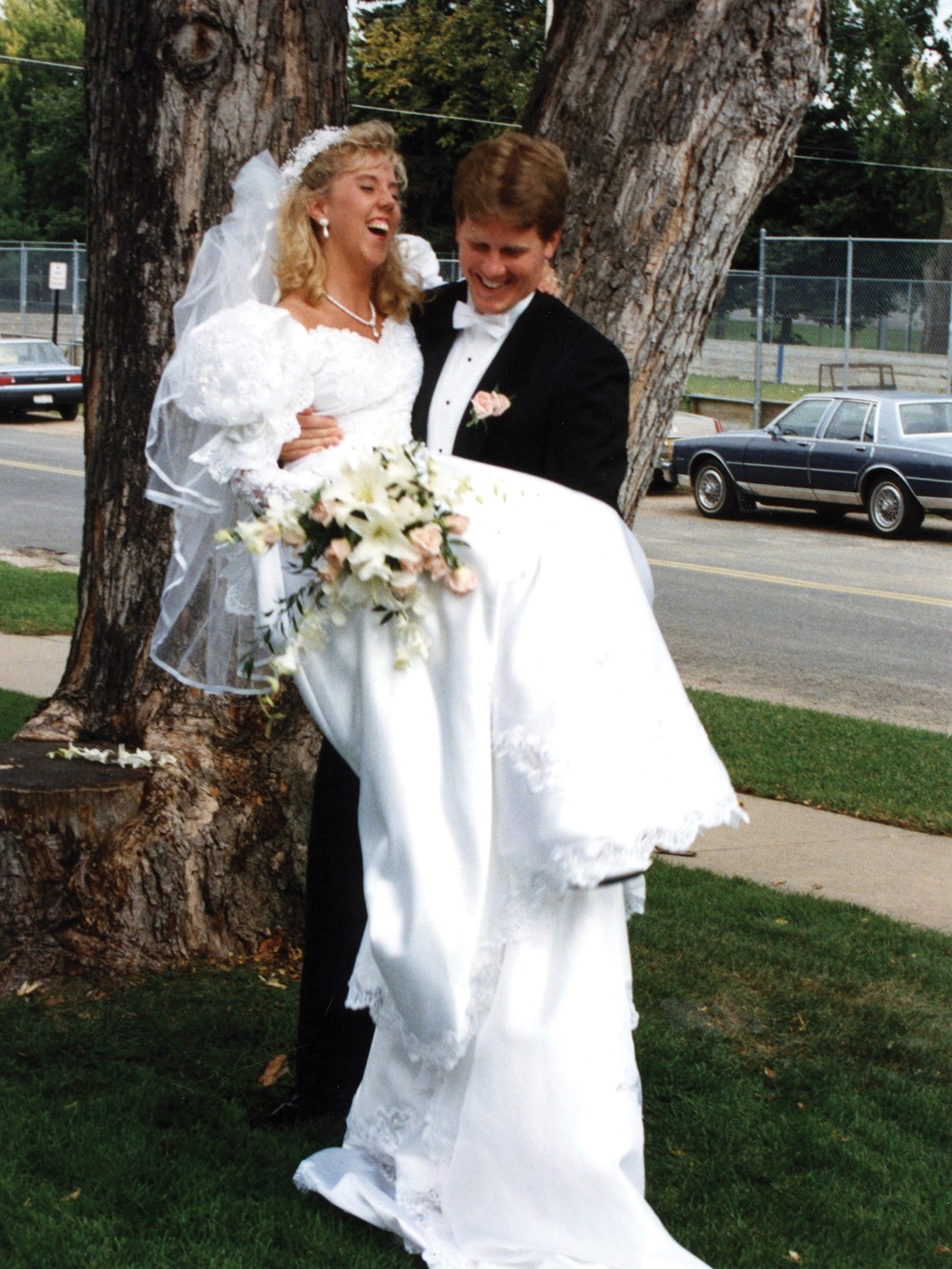
Paige Mead’s parents, Evan and Sandy (neé Gibson) Anderson, on their wedding day on September 12, 1992. Sandy’s gown was purchased at The Wedding Shoppe on St. Paul’s Grand Avenue, which is where Paige also purchased her wedding dress. Photo: Paige Mead
Current brides are typically redesigning their moms’ gowns from the 1990s or thereabouts. Trends during that era leaned toward high necklines and puffed sleeves. “So the most common requests in the past few years are to lower the neck and remove the puffed sleeves,” Baldridge says. “It’s also very in to shorten the dresses—sometimes we leave everything alone in the bodice and make it crazy short for a party dress.”
Practically speaking, Baldridge uses the same techniques for vintage remakes that she does for typical alterations. She’s always happy to take a peek at a vintage dress to scope out whether it can be successfully altered and where extra fabric will come from; then, after carefully measuring the bride and mapping out where tucks or new seams should go, she uses fabric from the removed pieces—often the skirt, sleeves or train—to add panels. The process can take multiple appointments and often includes “next steps” to see whether a neckline, for example, is the right height. “I’ll ask whether they want to go lower and take it bit by bit,” Baldridge says.
And for brides who aren’t interested in repurposing a vintage gown, Baldridge has other poignant, clever ways to incorporate some family history into a modern gown. “We can sew in buttons from a grandparent’s shirt or a pendant from a necklace,” she says. (One group of sisters carefully moved a grandmother’s pendant from dress to dress as they celebrated their weddings.) Baldridge also loves adding a hidden piece that’s sewn into the underside of the bride’s skirt: maybe a heart-shaped applique from a father’s shirt or lace from a mother’s veil. “Again, it’s telling a story,” Baldridge says. “This is an item from someone who has meant something to them; their ‘something old.’”
Paige (neé Anderson) Mead attended her October 2025 rehearsal dinner with now-husband Collin Mead in a knee-length dress that was formerly her mother, Sandy (neé Gibson) Anderson’s, wedding gown. Baldridge remade it. “My mom passed away when I was in high school, so having her dress as part of my nuptial weekend felt like the most perfect way to have her with me, close to my heart,” Mead says. “I kept everything as it was in 1992—gigantic sleeves and all.”