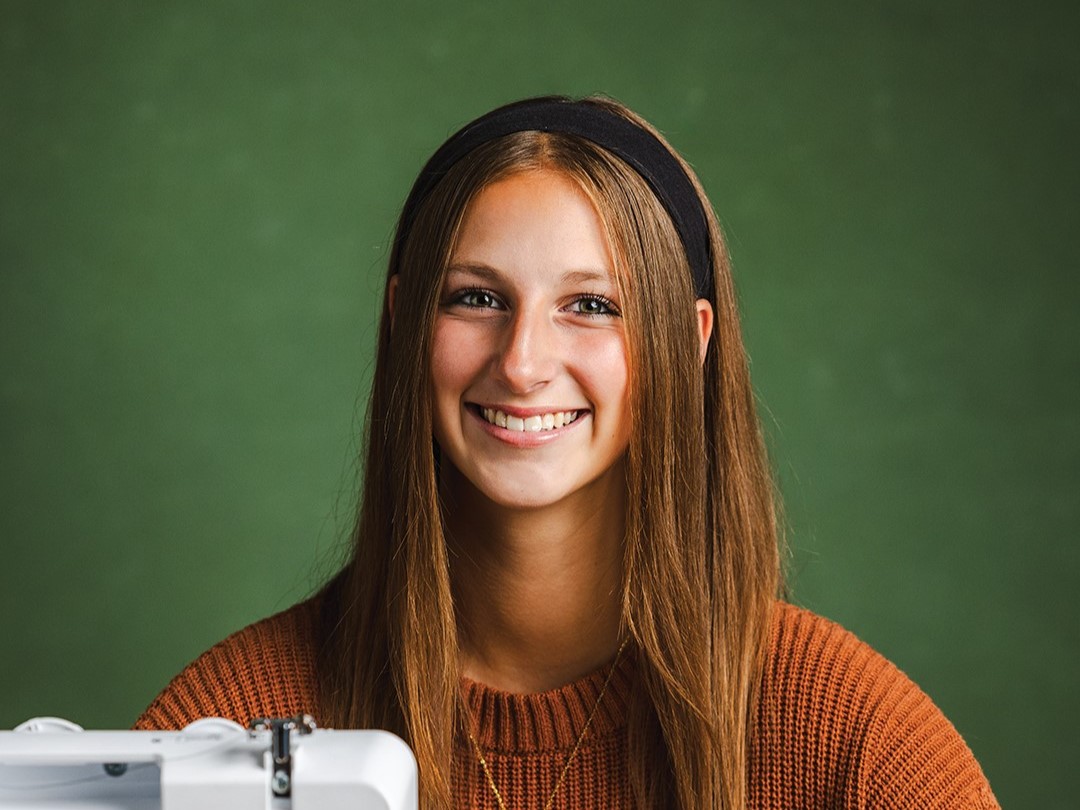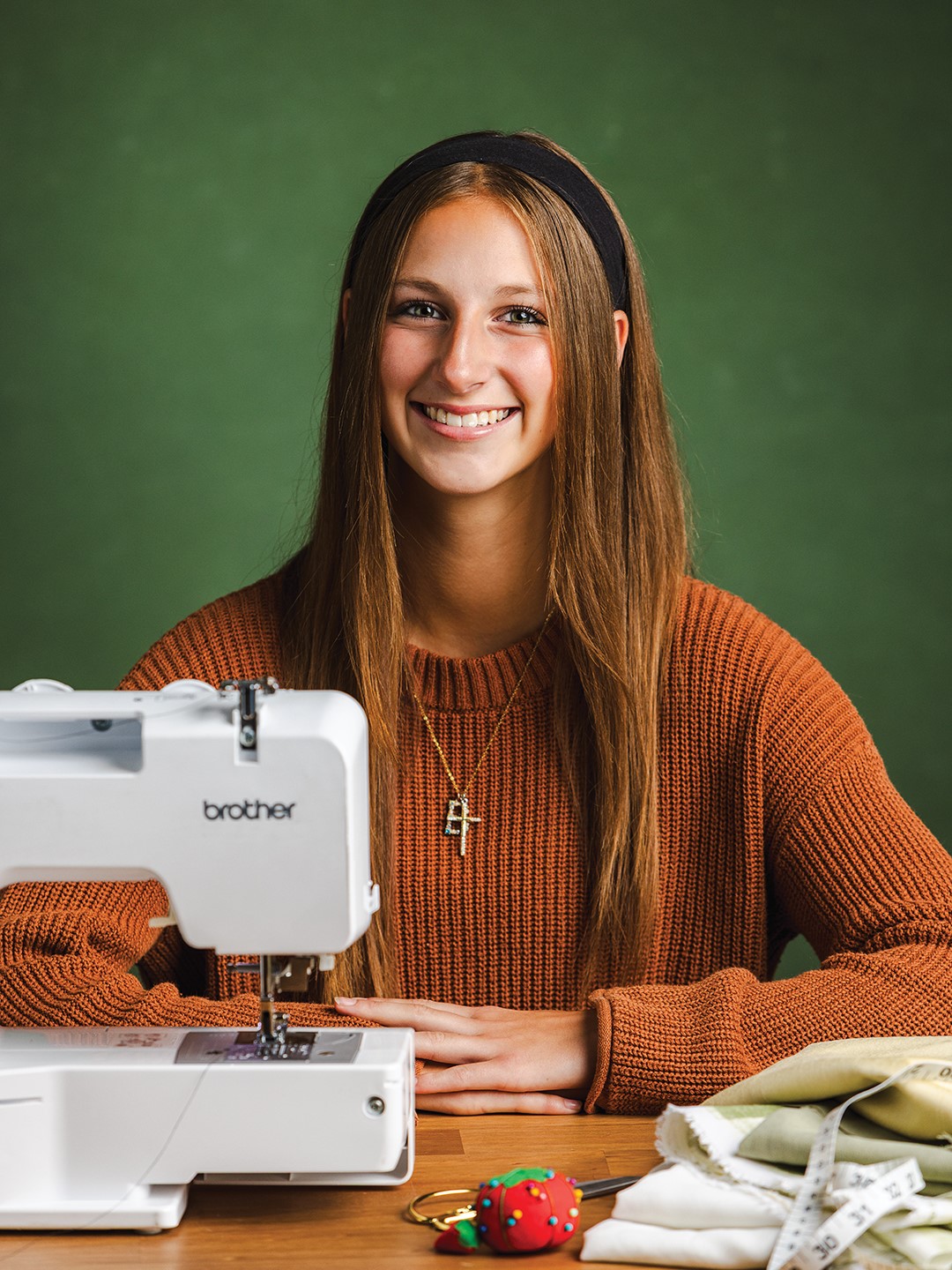
Bella Shields, 16, enrolled in the fashion design course during her sophomore year at East Ridge High School. Photos: Chris Emeott
Students are building their confidence and creativity.
From discovering historical trends to sketching croquis designs, students in the South Washington County Schools fashion design course are learning the brass tacks of the industry. “Fashion isn’t about who’s the most popular or what’s the most popular,” says Louise Allen, a teacher at East Ridge High School (ERHS). “It’s about dressing yourself and feeling confident in who you are.”
Confidence is just one of many skills that students are learning through the fashion design course. It falls under the Family and Consumer Science (FACS) program and has been offered at local high schools for several years, serving as an introduction to the garment industry.
A Life-long Skillset
Students begin by learning about the importance of clothing and the history of fashion, where they see how clothing has developed over the years. Then, they move into the cycle of trends. “I love that unit. Kids are giving me the ‘ins and outs’ of clothing,” says Olivia Keen, a teacher at Woodbury High School (WHS). Elements and principles of design are next, and students utilize their artistic skills to craft croquis sketches. Finally, their knowledge is put to the test; students at WHS create hand-stitched portraits, and those at ERHS use a sewing machine to craft tote bags and create fashion sketches. “They absolutely love it. They really, really do love the hands-on piece of it, and they’re so proud of their projects when they get done,” Allen says.
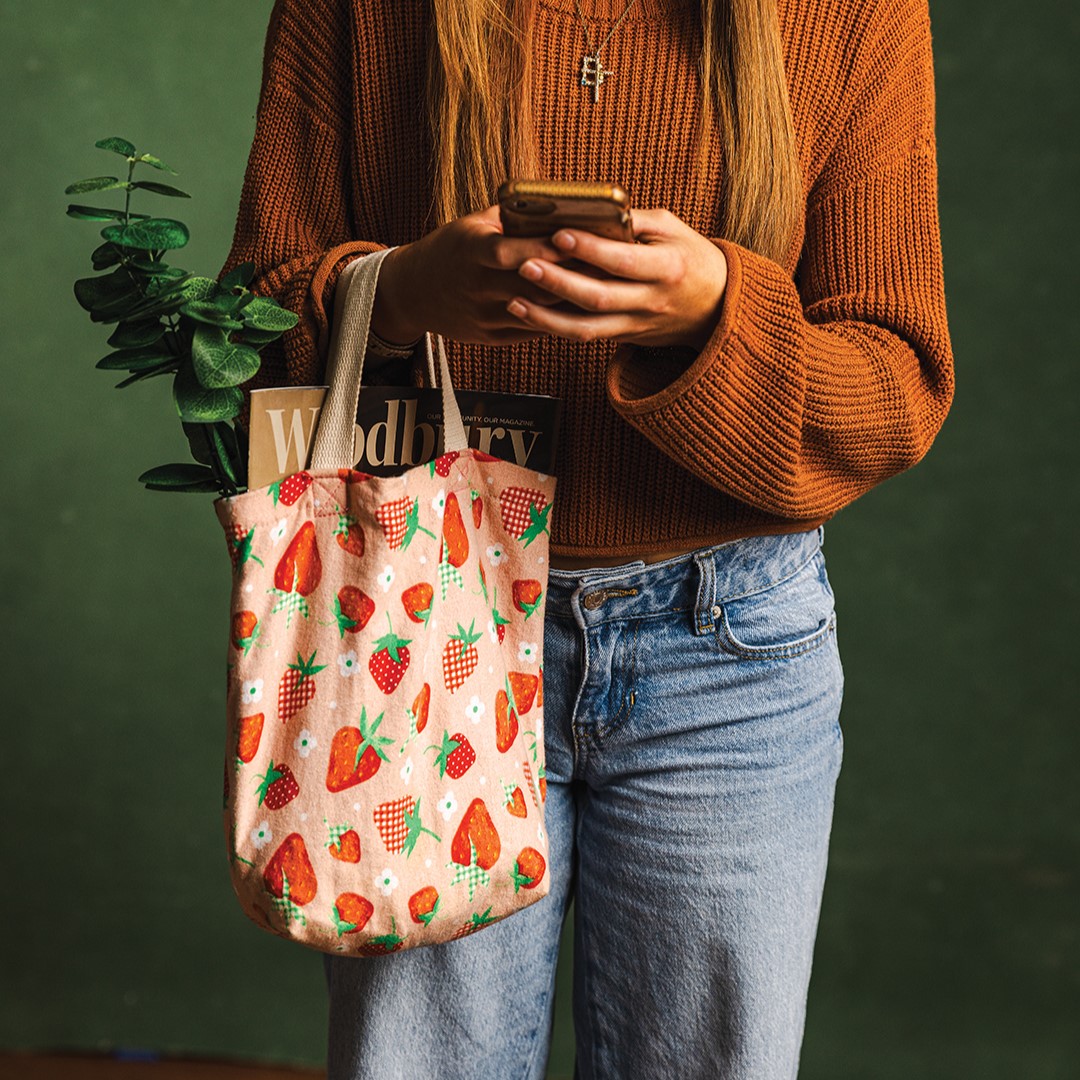
This tote bag created by Bella Shields is as sweet as it is practical.
Bella Shields, 16, enrolled in the class during her last trimester of sophomore year at ERHS. “I took the course to learn how to sew, to be able to fix clothes or repurpose them and to learn how to style different body types,” she says. At the end of the trimester, Bella says she most enjoyed sewing the tote bag, but she also walked away with more than just sewing skills. “In my daily life, I have been able to put together outfits that look better due to using the principles and elements that I learned,” she says.
Keen has witnessed students utilize the skills outside of the classroom to hand-embroider sweatshirts or craft college pennants. Emma Kleven, 18, a WHS alumna, is one such student. “I’ve made some of my teachers’ pennants with their names on it (including Keen), and also a college pennant I hand-sewed,” Kleven says. Keen adds, “They learn a whole skill. It’s exciting to see those things go outside of the classroom.” Both teachers say the course connects fashion into daily decisions, such as choosing what to wear, and provides practical know-how. “Sometimes, students have an inkling of, ‘Does this look good? Do I feel confident or comfortable?’ That’s more of a confidence skill … When it comes down to it, our sewing unit gives parents the moment of, ‘I’m so happy they’re learning how to sew on a button,’” Keen says. “This is what FACS is; it’s life skills.”
Kleven, now a freshman at Augsburg University, had been involved with the WHS theater program since her sophomore year and served as the costume head for Urinetown. Then, Kleven enrolled in Keen’s fashion design course after having her for several other classes. “Whenever I wanted to express myself creatively and go the extra mile with my projects, [Ms. Keen] was always my biggest support,” the former WHS student says. Kleven notes the self-portrait project as her “absolute favorite assignment in all of high school.”
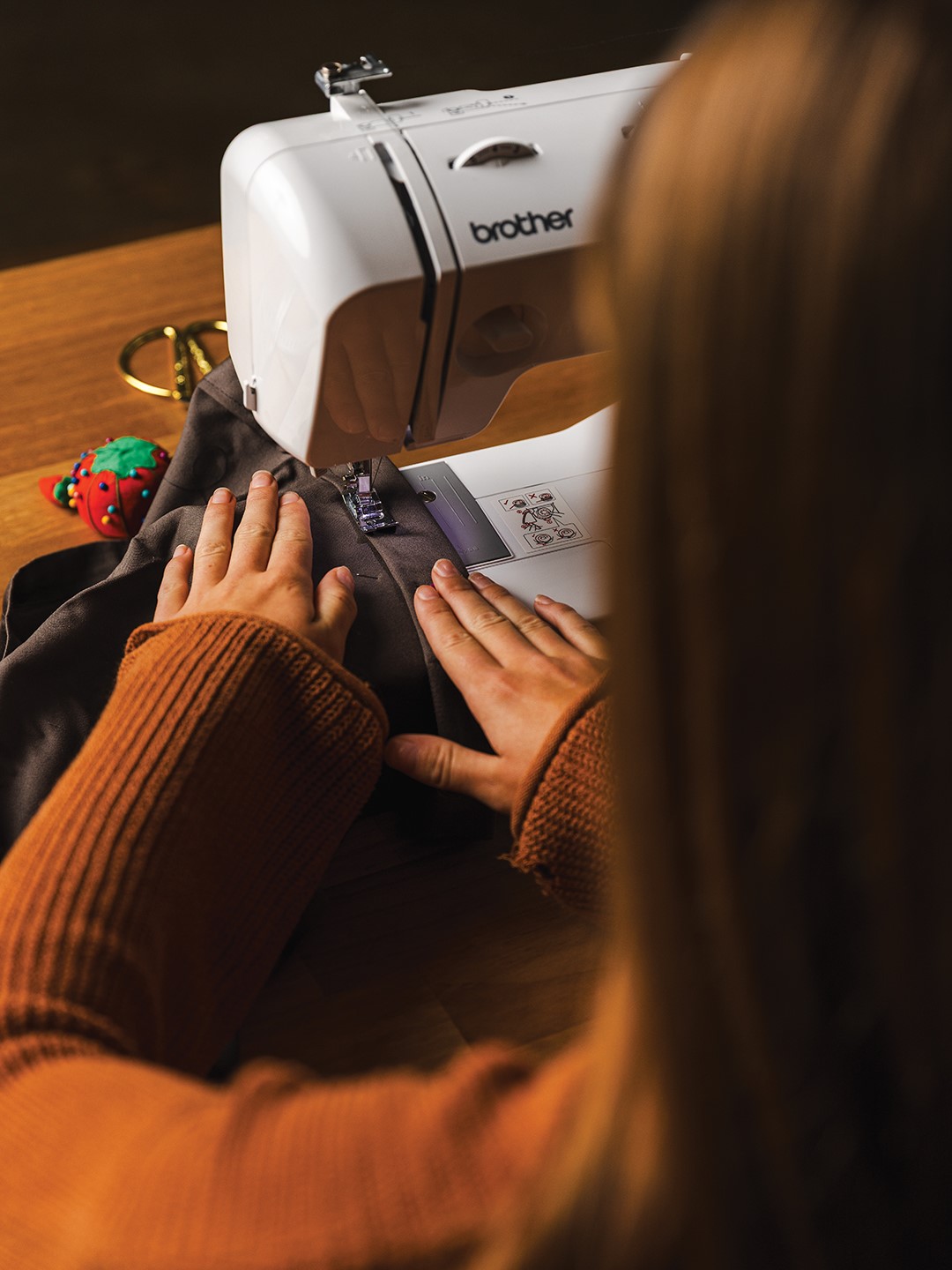
Bella Shields uses her new skills as she takes to the sewing machine.
A Changing Course
The course has evolved over the years, and the permanent closure of craft and fabric stores, such as Joann Fabrics, has made it difficult to complete certain projects. “[Last] year, I dug through the cabinet and reached out to the community for fabric donations,” Allen says, noting that contributions are always accepted and appreciated. Although fashion design is a singular course offered for one trimester, Allen and Keen hope a secondary course is added in the future. “We’re in hopes of starting a new class for Fashion Design II, which would be more focused on clothing construction with sewing machines,” Keen says.
At the end of each trimester, students are amazed at what they’ve learned about the industry. “They have no idea how much work [fashion design] is, how technical it is and how a little mistake can make a big difference,” Allen says. “Some of them leave the class and want to buy a sewing machine; some leave, and they want to buy their clothes already made.”
For Bella, the course inspired her to continue to learn more. “In the future, I would like to explore fashion in the sense of making my own clothes and getting better at sewing to be able to make other people clothes as well,” she says. Although Emma doesn’t have plans to explore fashion as a career, she says, “I still absolutely adore researching new fashion trends and aspire to be as chic as [Sex and the City’s] Carrie Bradshaw.”
Keen hopes students take away important knowledge such as the aforementioned sewing on a button; more importantly, she hopes that students feel more self-assured and comfortable within themselves. “It’s more or less building the confidence that everyone has their own style,” Keen says. “Whatever their style is, I want them to say, ‘This is me.’”
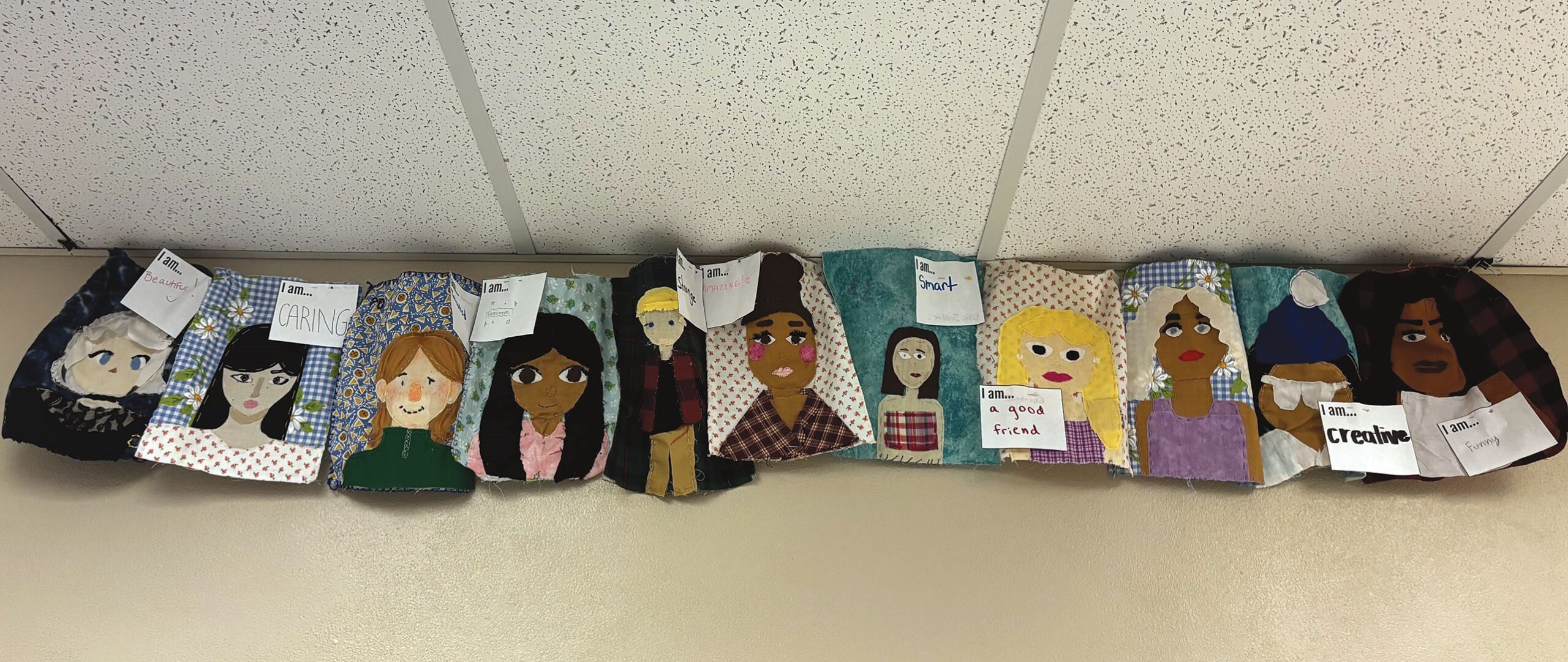
To round out the semester, Woodbury High School students sew self portraits. One year, students were required to share an affirmation about themselves alongside the project. Photo: Olivia Keen
South Washington County Schools
Facebook: South Washington County Schools