Photo: Jess Denton
Brian Nicholson shares hard-earned insights about his journey to sobriety.
For many, September represents turning the page to a new chapter. It’s not simply the start of a new season; as National Recovery Month, September signals a time to celebrate progress, recognize struggles and build toward a stronger future. And for some, turning the page is just the start.
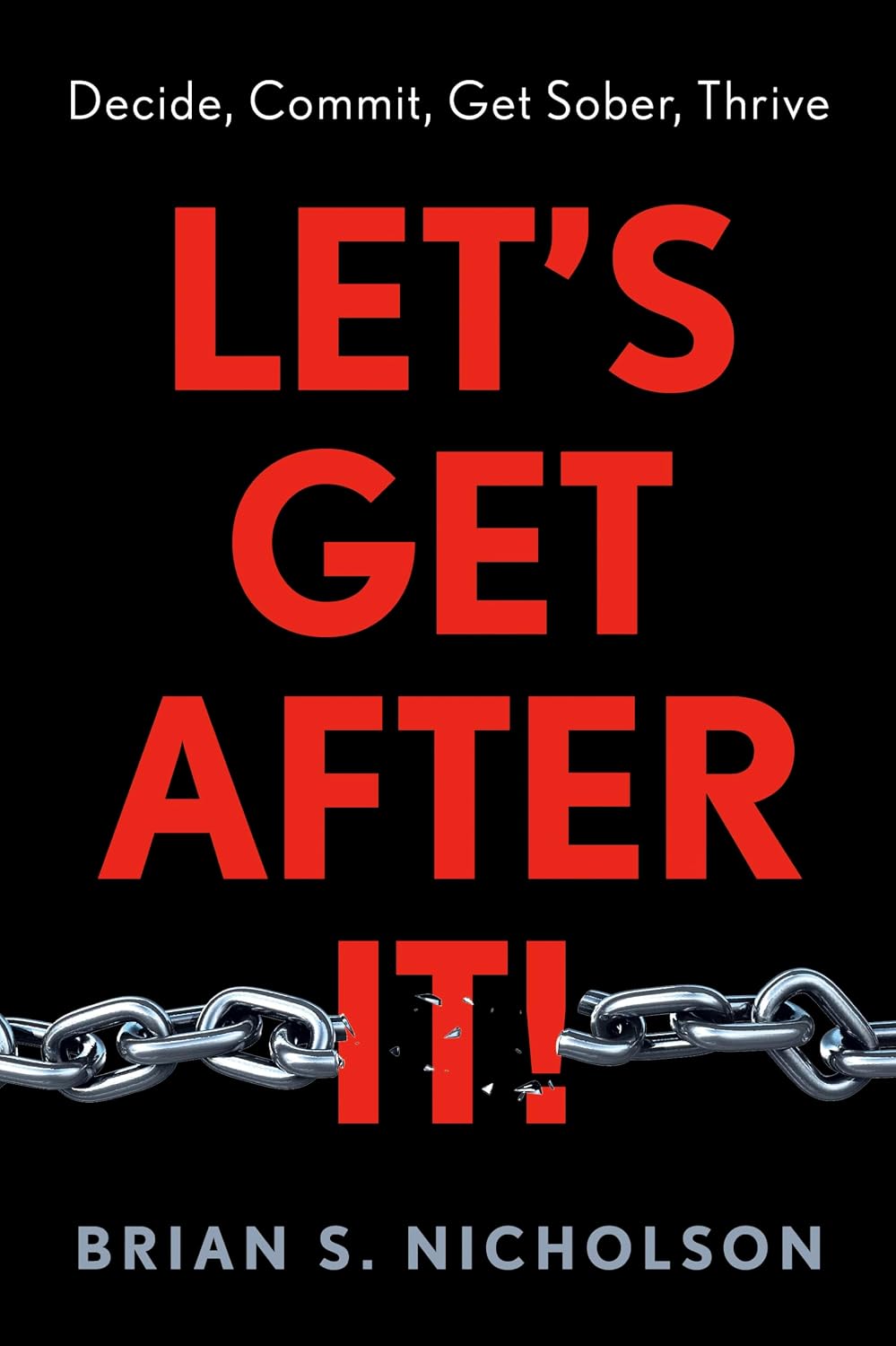
Rather than writing his next chapter, Woodbury resident Brian Nicholson wrote an entire book. Let’s Get After It!, published this summer, mixes memoir with resources as it recounts Nicholson’s personal insights about the road to recovery. And, like recovery, the process wasn’t easy. “The thought of writing my story was terrifying,” he says. “I had to keep pushing through that fear to publish it.”
Let’s Get After It! is one part of Nicholson’s trifold approach to sharing his recovery journey with the community. As a Minnesota Certified Peer Recovery Specialist, he leads Let’s Recover!, a free, public group that meets from 6:30–8 a.m. every Thursday at Jerry’s Foods in Woodbury. For those who don’t feel comfortable in the group environment, Nicholson also offers Let’s Talk!, peer-to-peer recovery and life coaching sessions available online or in person. “The book reflects my personal experience, while the [Peer Recovery Specialist] training strengthened the work I now do in peer recovery support,” he says. “I believe there are many pathways to recovery, and each person needs to find the approach that works best for them.”
We asked Nicholson to share more about his recovery journey and the process for writing Let’s Get After It! for National Recovery Month.
What motivated you to share your recovery story through Let’s Get After It!?
During therapy, I began journaling as part of my recovery. At some point, I asked myself, “What if sharing my experience could encourage someone else to make a major change in their behavior and give themselves the opportunity to live their better life?” That idea moved me from journaling privately to writing with purpose. The process became both therapeutic and productive, and I hoped it could help someone feel less alone.
In the preface, you claim you’re not a writer. What did the writing process for this book look like, and how did you find your voice as a writer?
Writing, itself, was the easy part. Anyone can put thoughts on paper. The harder work was expanding those thoughts, adding details, confirming dates, documenting sources, organizing chapters and making sure the story would engage readers. My editors [at Greenleaf Book Group Press] did a great deal of the heavy lifting. They helped turn my experiences and journal entries into a book that readers could follow and connect with. My voice came from being honest. I did not try to sound like someone else; I simply told the truth about my life, my mistakes and what helped me move forward.
The book shares personal stories about witnessing your parents’ addiction to alcohol and your subsequent addiction. How did you approach revisiting these memories and emotions?
Thankfully, therapy gave me a foundation for revisiting those experiences. I had already addressed many of these issues more than once, so I was not writing from a place of discovering them for the first time. Through that work, I came to understand that much of my alcohol use was self-medication. I was trying to cope with childhood trauma, [post-traumatic stress disorder] and mental-health issues I had not addressed. I was not simply drinking because I enjoyed drinking; I was trying to numb something I had carried for years. For a long time, I sensed that something inside me was off, but I never slowed down enough to understand what it was. I was high-functioning, had a successful career and was raising a family, so life kept moving. But internally, the weight kept getting heavier.
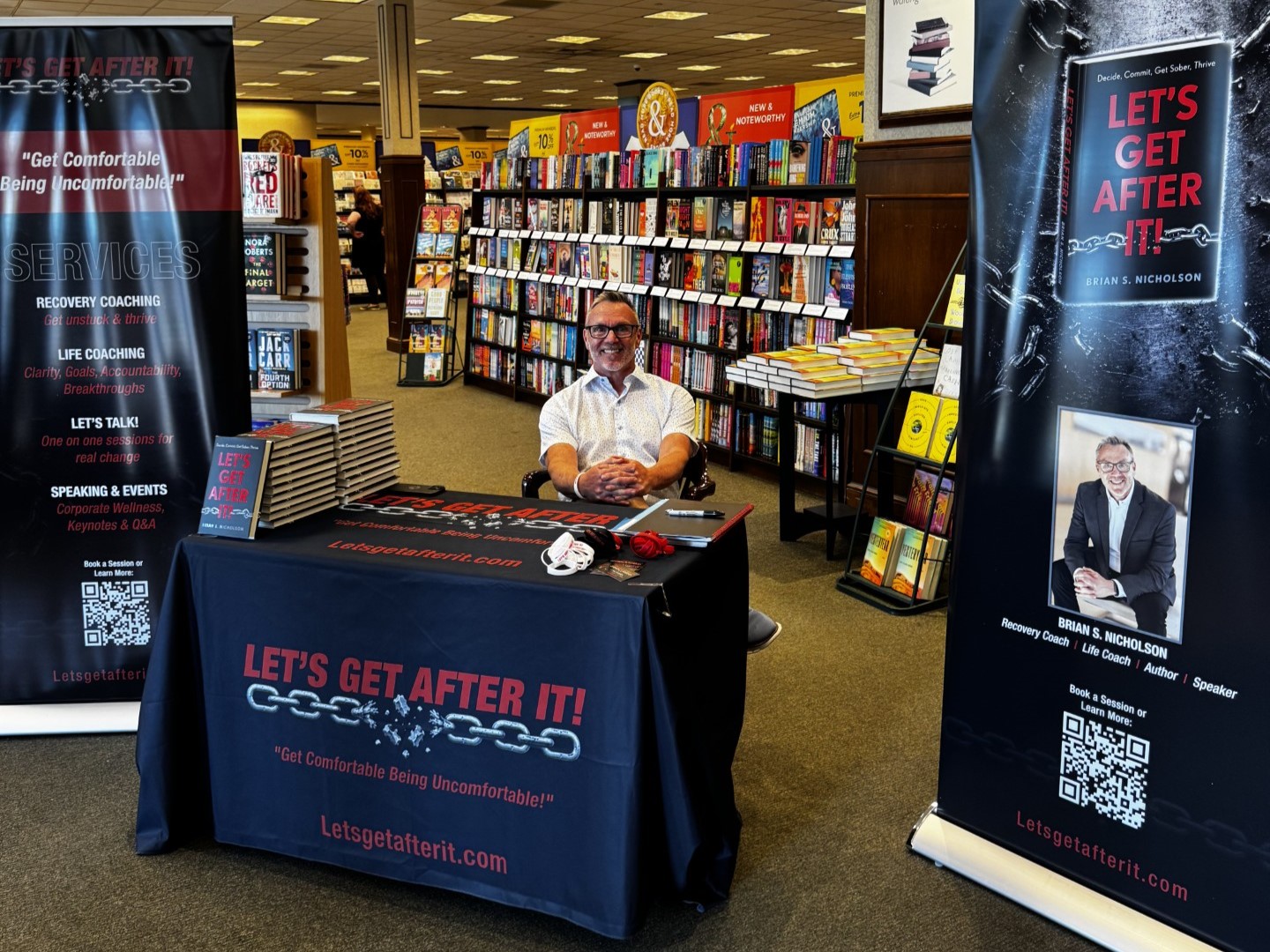
Brian Nicholson’s book tour will stop by the Woodbury Barnes & Noble from 1–4 p.m. on September 19. Photo: Brian Nicholson
Who is this book for?
Let’s Get After It! is for people who are curious about a sober lifestyle, struggling with mental health and/or addiction, or in their first year of recovery. That first year can be especially challenging, which is why having a personal strategy, support system and willingness to ask for help can matter so much.
During my 2026 book tour, I have also seen many people purchasing the book for someone they love who is struggling. Families are often carrying fear, uncertainty and financial stress while trying to support someone dealing with addiction or mental-health challenges. Their experience matters, too.
If you had to boil down Let’s Get After It! into one takeaway for the reader, what would you want it to be?
You have to decide that you want to make a change. Recovery does not work if you do not want it for yourself. There is no quick fix. Be patient, give yourself grace and recognize both the small and big steps forward. Early recovery can feel fragile, but strength and healing grow day by day. It is often a slow grind. Determine what keeps you going and define your “Why.” Why do I want recovery? Who am I doing this for? The answer, by the way, is you.
Let’s Get After It! is about continuing to move forward—even on the days when you do not want to.
This month, Nicholson is making two local stops on his book tour with the first from 7–8 p.m. on September 10 at SubText Bookstore in St. Paul and the second from 1–4 p.m. on September 19 at the Woodbury Barnes & Noble. “One of my favorite parts of these events is when people share their personal recovery stories, whether they buy a book or not,” he says.
Let’s Get After It!
Facebook: Let’s Get After It, Brian S. Nicholson